Fighting back against climate change.
For the communities in Samlaut, climate change has arrived.
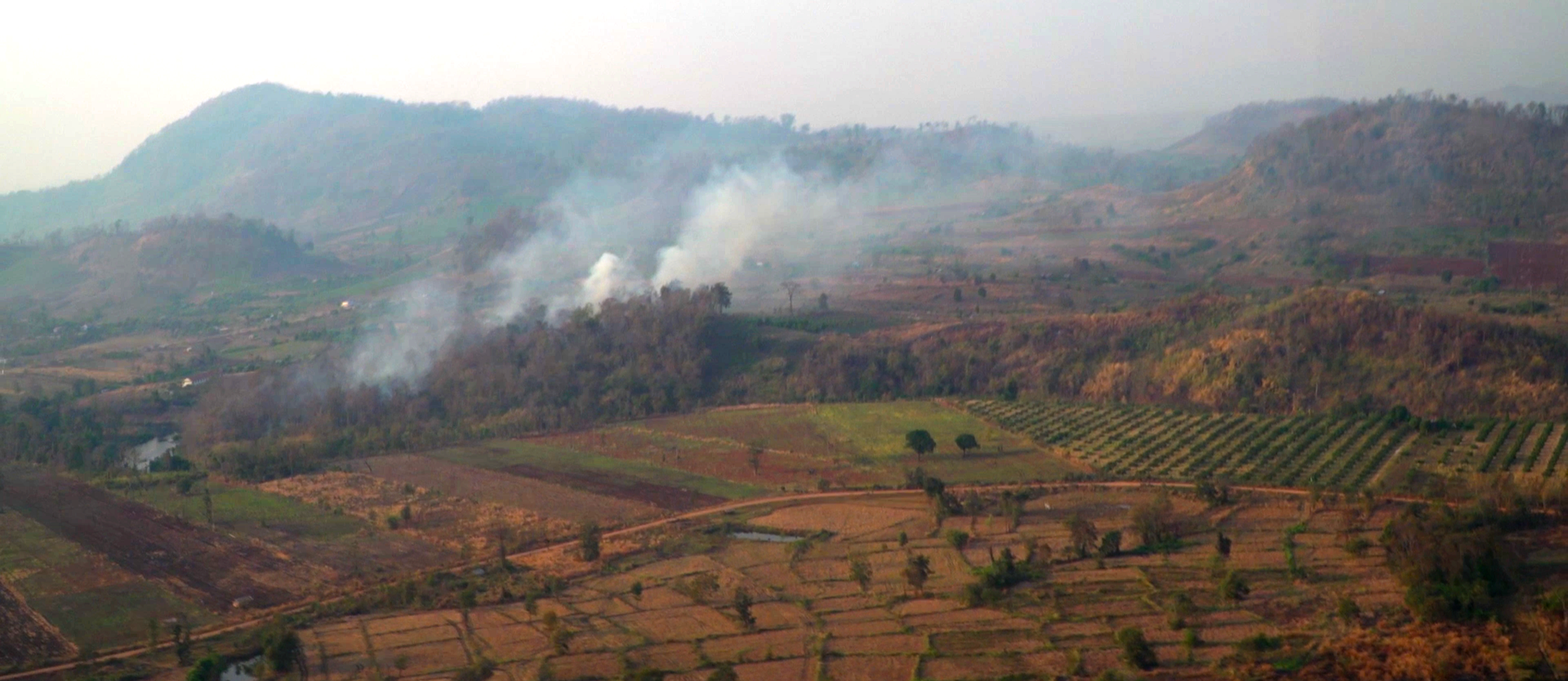
When your income comes directly from the land, a shifting climate — longer dry seasons, a less predictable harvest, and soil that gives less each year — is a direct threat to your livelihood. Restoring the landscape bolsters biodiversity, but it’s also a way to rebuild the natural systems that hold water, hold soil, and keep farming viable as conditions get harder.
That's the idea behind this project: restore the forest and the farmland at the same time, so the recovery of the land and the security of the people living on it advance together.
The approach blends forest restoration with agroforestry and agroecology — farming methods that work with the landscape rather than against it — to build climate resilience, strengthen biodiversity, and open up better, more durable ways for families to earn a living.
Much of the work is already underway with community forest members in the Sangker River Basin headwaters in Battambang Province, the same watershed where we've focused our restoration efforts — chosen because protecting a river's source protects everything downstream of it.
The project is run in partnership with the Asian Development Bank, with support from the Government of Japan through the Japan Fund for Prosperous and Resilient Asia and the Pacific, as part of a regional climate-adaptation effort spanning Cambodia, Bangladesh, and the Philippines. In Cambodia, it's carried out with the Royal Government's Ministry of Environment and Forestry Administration, with technical support from the International Centre for Environmental Management and the World Agroforestry Centre.